Perimenopause: Symptoms, Hormone Changes & Natural Support
Perimenopause can begin earlier than many women expect. While it’s often associated with the 40s, it can start as early as the mid-30s and continue into the early 50s, before periods stop completely.
Menopause itself is reached once a woman has gone 12 consecutive months without a menstrual period, with the average age occurring in the early 50s. The years leading up to this point are known as perimenopause — and for many women, this is when symptoms are at their most confusing and disruptive.
Understanding perimenopause is the first step toward feeling supported, empowered and informed during this powerful life transition.
Understanding Perimenopause: Nothing Is Broken
One of the most important things to know about perimenopause is this: there is nothing broken about your body.
Perimenopause is not a hormonal failure or something that needs to be “fixed.” It is a natural biological transition where hormones begin to fluctuate as your body prepares for the next phase of life. Rather than fighting these changes or trying to force your hormones back to how they were in your 20s, the focus becomes learning how to support your body, mind and nervous system through this natural shift.
With the right nutrition, lifestyle support, nervous-system care and evidence-based natural therapies, perimenopause can be navigated with greater ease, clarity and self-compassion.
When we shift the perspective from problem to initiation, perimenopause becomes an invitation to slow down, reassess boundaries, and listen more deeply to what your wise-woman self needs in this next chapter of life.
What Is Perimenopause?
Perimenopause means “around menopause” and describes the transition years before the final menstrual period. During this time, ovarian hormone production begins to fluctuate and gradually decline.
Oestrogen and progesterone levels can become unpredictable, which may lead to a wide range of symptoms, including:
Changes in cycle length or flow
Mood swings, anxiety or low mood
Poor sleep or insomnia
Night sweats or hot flushes
Brain fog or memory changes
Fatigue or low energy
Changes in libido or weight
Menopause, by contrast, is a single point in time. A woman is officially in menopause when they have had 12 months without a period. Everything after this point is called postmenopause, when hormone levels stabilise at a new, lower baseline and long-term health considerations — such as bone, heart and brain health — become especially important.
When Does Perimenopause Start?
Most women enter perimenopause 4–8 years before menopause. Research suggests the typical onset occurs in the mid-40s, though it can begin anytime from the mid-30s to early 50s.
Large population studies show:
Median age of perimenopause onset: 47–48 years
Median age of natural menopause: 50–52 years
For some women, the first sign of perimenopause is a change in their menstrual cycle — periods may become shorter, longer, heavier or lighter. For others, symptoms such as anxiety, night sweats, poor sleep or brain fog appear before cycles change at all.
This wide variation is why a personalised, whole-person approach to perimenopause support is so valuable.
Perimenopause as a Wise Woman Transition
Across many traditional and Indigenous cultures, perimenopause and menopause are viewed not as a decline, but as a sacred transition into wise womanhood.
Among Māori, Native American, Mayan and other Indigenous cultures, postmenopausal women often hold respected roles as elders, healers and spiritual leaders. Their “wise blood” is seen as retained power and wisdom, rather than something lost.
In Japan, menopause has traditionally been described as a time of renewal and regeneration. Cultures that honour elders consistently report fewer struggles and less distress around menopausal symptoms.
Reframing perimenopause as an initiatory phase — rather than a medical problem — supports nervous-system regulation, self-compassion and proactive health-seeking behaviours, all of which can positively influence symptom experience and overall wellbeing.
How NaturopathY Can Support Perimenopause Naturally
A naturopathic, evidence-based approach to perimenopause looks at the whole woman — hormones, nervous system, gut health, sleep, metabolism and emotional wellbeing.
Research shows that lifestyle-based interventions such as personalised nutrition, movement, stress management and targeted supplementation can meaningfully support:
Hot flushes and night sweats
Mood and anxiety
Sleep quality
Energy and cognitive function
Cardiometabolic and bone health
Rather than taking a one-size-fits-all approach, naturopathic care focuses on understanding your unique symptom picture and addressing the underlying drivers contributing to hormonal imbalance during this stage of life.
Naturopathic support
Our online naturopathic consultations make personalised perimenopause support accessible from anywhere in Australia. They allow for in-depth case taking, functional test interpretation and the creation of a clear, supportive plan — without the added stress of travelling to appointments when you’re already exhausted.
This style of care is particularly valuable for women whose symptoms have been dismissed as “just stress” or “just getting older,” despite having a significant impact on work, relationships and quality of life.
To receive personalised support with perimenopause, the menopause transition, midlife hormone balance and wise-woman wellbeing, book an online naturopathic appointment today:
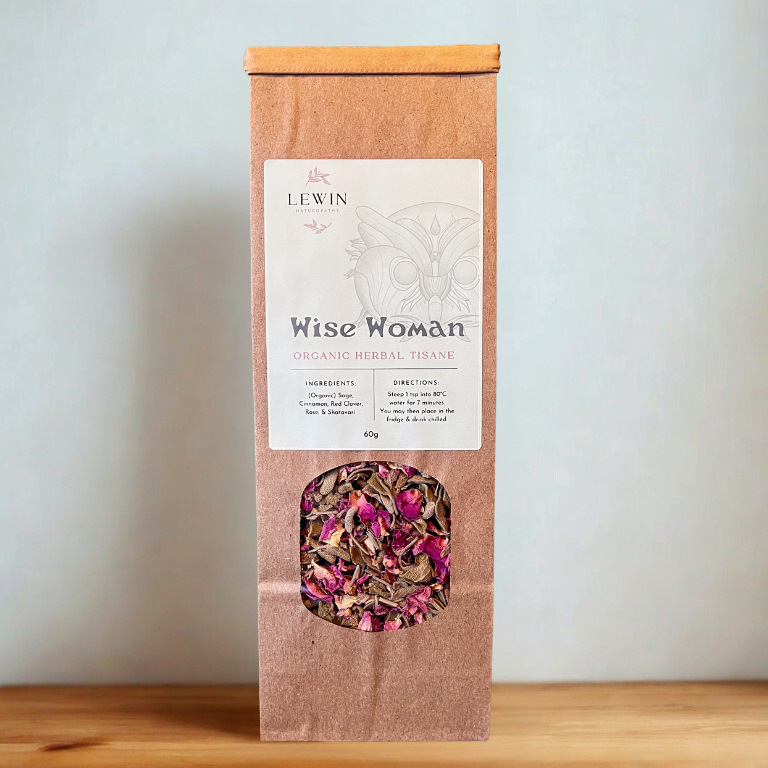
AN ORGANIC HERBAL BLEND TO HONOUR YOUR WISDOM AND STRENGTH
Embrace the transformative power of your body and spirit with Wise Woman Tea—an empowering herbal blend created to support women through perimenopause, menopause, and beyond.
Tuning into the wisdom of your body, Wise Woman Tea helps support emotional and physical wellbeing during life's sacred transitions. Sip this gentle blend to ease hot flashes, boost your libido, stabilise mood swings, and invite peace and relaxation into your day.
Benefits
Eases hot flushes and general heat
Supports hormonal balance during perimenopause and menopause
Supports blood sugar levels and reduces sugar cravings
Calms and nourishes the nervous system
Boost the libido
Organic Ingredients
Sage, Cinnamon, Red Clover, Rose, & Shatavari.
Size
60g - approximately 40 serves.
Serving Suggestion
Brew this blend daily to support your body during perimenopause and menopause. Steep 1 teaspoon in boiled water for 5-10 minutes, take a deep breath, and embrace the wisdom of this transition. You may also place the tea in the fridge and drink it chilled.